
Clinical nursing • Illustrated bedside guide
When a patient starts to deteriorate, the first clue may be a small change: faster breathing, unusual restlessness, or a relative saying, “This is not how he normally behaves.”
For a nurse, taking observations is only the beginning. The next questions are: what has changed, how urgent is it, and who needs to know? This guide uses an adult ward example to connect assessment with action.

Photo: Alice.Mukesh · Wikimedia Commons · CC BY-SA 4.0. Unaltered; displayed to fit.

1. Notice the change before it becomes a crisis
An observation chart should tell a story over time. Compare the current findings with earlier readings and the patient’s usual condition. Listen to what the patient and family are reporting. NICE recommends a response to deterioration based on the observation score or clinical concern; concern does not need to wait for a high score. [1]
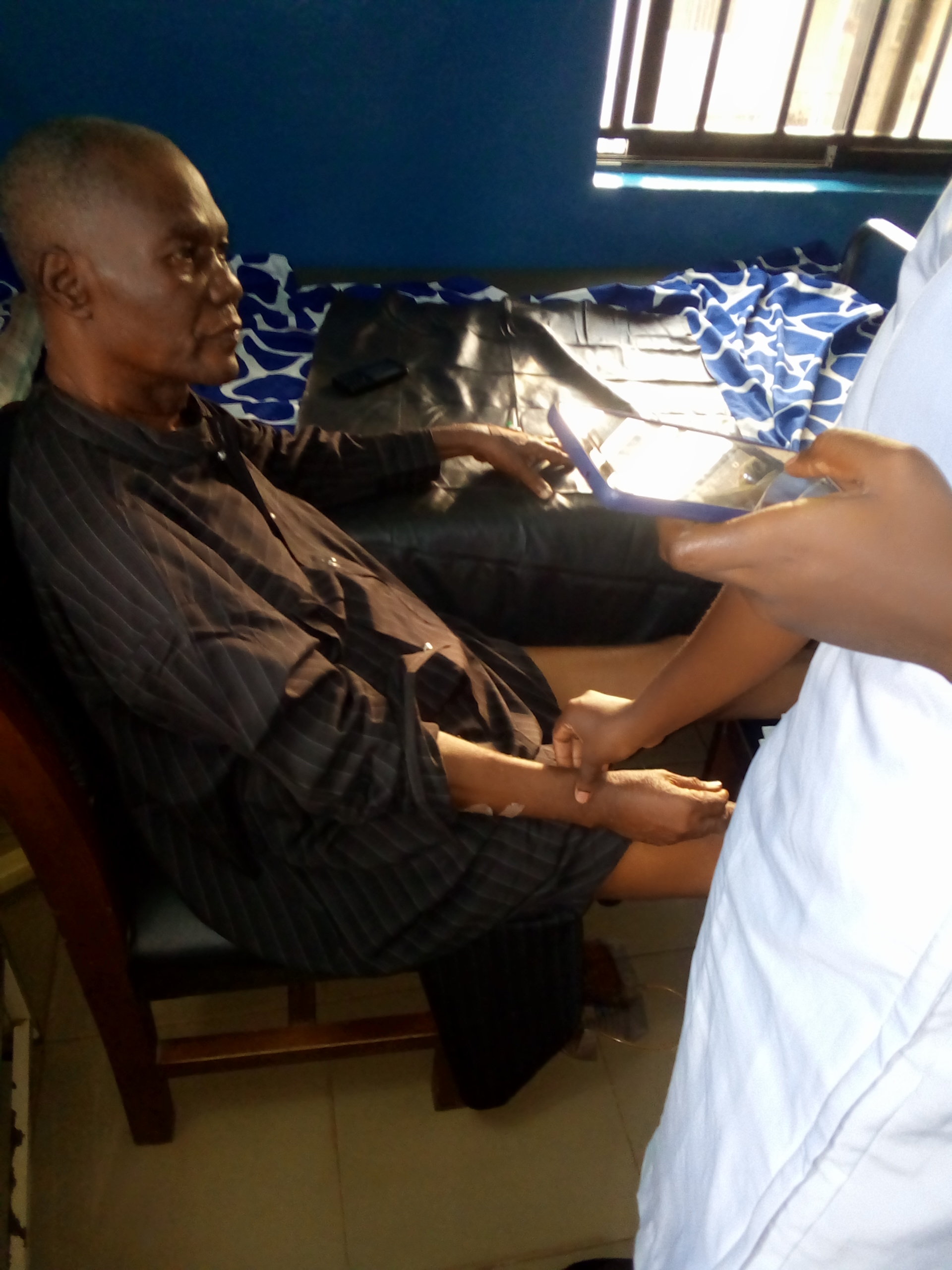
Photo: Chibuikem Obi · Wikimedia Commons · CC BY-SA 4.0. Unaltered; displayed to fit.

Measure, compare, communicate
Record respiratory rate, oxygen saturation, pulse, blood pressure, temperature and level of consciousness using the local observation system. Document oxygen use, including its device and flow, where applicable. Increase monitoring and escalate when indicated by the findings and local policy. A number without a time, a trend or an action is an incomplete account of what happened. [1]
| What you notice | The nursing question |
|---|---|
| Breathing has become faster or more difficult | What does the patient look like now, and what was the previous respiratory rate? |
| The patient seems unusually drowsy or confused | Is this new? What is the airway, breathing and glucose assessment? |
| Blood pressure is falling or the pulse is changing | What are the associated symptoms and signs of poor perfusion or bleeding? |
| A relative says the patient is “different” | What is their normal behaviour, and when did the change begin? |
2. Use ABCDE to organise your assessment
ABCDE means Airway, Breathing, Circulation, Disability and Exposure. Assess systematically, address immediate threats as you find them, call for appropriate help early and reassess after interventions. It is a repeating assessment, not a form to finish before requesting assistance. [2]
A — Is the airway clear?
Check whether the patient can speak and whether there are signs of obstruction, such as noisy breathing or gurgling. An airway problem needs immediate skilled help and airway support within your training. Do not continue down a checklist while an obvious life threat remains untreated. [2]
B — How is the patient breathing?
Count respirations, observe effort and chest movement, and check oxygen saturation. Use chest examination skills within your competence. Record what you actually see rather than writing “breathing normal” without an assessment. [2]

Photo: Fatimah Bello · Wikimedia Commons · Public domain / CC0. Unaltered; displayed to fit.


Photo: Stefan Bellini · Wikimedia Commons · Public domain / CC0. Unaltered; displayed to fit.


Photo: Netha Hussain · Wikimedia Commons · CC BY-SA 3.0. Unaltered; displayed to fit.

C — Is circulation adequate?
Assess pulse, blood pressure, peripheral perfusion and possible bleeding. Review available fluid balance information. Report changes with their times and relevant symptoms. Decisions about fluids and other treatment need clinical assessment and the appropriate authorised plan. [4]
D — Has consciousness changed?
Assess responsiveness using the facility’s approved method, establish the baseline and check blood glucose when consciousness changes. Hypoglycaemia is a reversible cause that must be considered. Maintain close observation and escalate; follow the local treatment and repeat-check protocol if a low result is found. [4]

Photo: PerPlex · Wikimedia Commons · Public domain / CC0. Unaltered; displayed to fit.

E — What else needs to be seen?
Inspect for relevant findings, including bleeding, wounds or a rash, while maintaining privacy and warmth. Measure temperature and complete the focused assessment. Expose only what is necessary. [2]

Photo: Srini297 · Wikimedia Commons · CC BY-SA 4.0. Unaltered; displayed to fit.

3. Work through a ward scenario
Fictional teaching case: Mr Musa, 58, is admitted with a chest infection. At 08:00 he is alert, speaking comfortably and breathing 18 times per minute. At 10:00 he says he feels worse. He can speak, but only in short phrases. His respiratory rate is 30/min, SpO₂ is 90% on room air, pulse 118/min and blood pressure 96/60 mmHg. He is newly confused.
Pause before reading further. What would you say to the nurse in charge? Which information matters most? Would you wait for the next routine observation round?
Reveal the clinical reasoning
This combination of new respiratory distress, low oxygen saturation and altered mental state requires urgent escalation and reassessment. Start with immediate threats, call for senior/emergency support through the local pathway, and provide care within the relevant protocol. These findings do not establish a final diagnosis. Avoid assuming that the original admission diagnosis explains every new change.
A useful teaching exercise is to give one student the assessment role, another the escalation call, and a third the documentation role. Ask the observer to note whether the team gave exact readings, stated that the confusion was new and requested an immediate review. Practise saying the words aloud: an urgent situation is a poor time to discover that your message is unclear.
4. Make the escalation call clear with SBAR
SBAR structures information into Situation, Background, Assessment and Recommendation or Request. State the urgent problem early, give relevant context, describe your findings and say what you need and when. Confirm the response and clarify any instructions. [6]
| Step | Example using the fictional case |
|---|---|
| S · Situation | “This is the nurse on the medical ward calling about Mr Musa in bed 6. He has new breathing difficulty and confusion. I need an urgent bedside review.” |
| B · Background | “He is 58 and was admitted with a chest infection. At 08:00 he was alert with a respiratory rate of 18.” |
| A · Assessment | “At 10:00 his respiratory rate is 30, SpO₂ 90% on room air, pulse 118 and BP 96/60. He speaks in short phrases and is newly confused. I am concerned about acute deterioration.” |
| R · Request | “Please attend immediately. I have activated our escalation pathway and am reassessing him. Who will attend, and what should we prepare while help is coming?” |
In a real call, use your organisation’s approved patient identifiers and report the care already provided and the response to it. If the first contact does not respond, continue along the escalation pathway. Record the call time, who was contacted, advice received and the subsequent review. [1]
5. Close the loop: reassess and document
After an intervention, ask: what changed? Repeat the relevant assessment and record the response. During handover or transfer, explain what remains unresolved, what treatment is ongoing and what monitoring is required. A handover is not complete simply because the patient has physically arrived elsewhere. [4] [6]
Documentation exercise: Rewrite “patient not well, doctor informed” using the fictional case. Include the time, the patient’s statement, objective observations, who you called, what you requested and what happened next. Leave no invented treatment or outcome in the note: if something has not happened, do not document it as completed.

Photo: USDA / Peter Howard · Wikimedia Commons · Public domain / CC0. Unaltered; displayed to fit.

6. Check your understanding
Try answering before opening each explanation.
1. The observation score is low, but the patient has new confusion. Should you wait?
No. Clinical concern can trigger escalation independently of the score. Assess the change and follow the local response pathway. [1]
2. Is a single reassuring SpO₂ reading enough to rule out deterioration?
No. Interpret it alongside breathing effort, consciousness, other observations and the reliability of the measurement. [3]
3. In the fictional case, what makes the handover stronger than “he is not well”?
It identifies a new change, gives timed observations and baseline information, and clearly requests immediate review. [6]
4. When does ABCDE start again?
Reassessment follows interventions and any change in condition. An assessment made earlier does not describe the patient indefinitely. [2]
5. What if the patient becomes unresponsive with abnormal breathing?
Activate emergency help and start the resuscitation response immediately according to current training and local policy. Do not delay for routine charting. [5]
A bedside habit to practise on your next shift
Choose one patient and explain their observation trend to your supervising nurse: what has changed, what it could mean, what needs checking and when you would escalate. Practise linking findings to a clear action. The aim is to make your assessment understandable to the next person caring for that patient.
Sources and further learning
Prepared for Mini Nurses · 20 October 2026. The ward scenario and teaching exercises are original fictional examples. Photographs illustrate nursing observations and equipment; they do not depict the fictional patient or endorse a particular product or technique.
- NICE CG50: Acutely ill adults in hospital — recognising and responding to deterioration.
- Resuscitation Council UK: The ABCDE approach.
- FDA: Pulse oximeters and their limitations.
- WHO–ICRC: Basic Emergency Care, including ABCDE quick cards and transfer/handover resources.
- Resuscitation Council UK: Adult basic life support guidelines, 2025.
- AHRQ TeamSTEPPS: SBAR communication tool.
Each photograph carries its own source and licence above. Images are displayed without editing. For hands-on procedures and treatment decisions, use supervised clinical teaching and current local protocols.