
Hypertensive Disorders of Pregnancy: Pre-eclampsia and Eclampsia Nursing Care & Management
A detailed clinical guide to classification, pathophysiology, assessment, diagnosis, maternal and fetal complications, medical management, eclampsia emergency care, and nursing/midwifery interventions.
What Are Hypertensive Disorders of Pregnancy?
Hypertension in pregnancy is generally defined as a systolic blood pressure of 140 mmHg or higher and/or a diastolic blood pressure of 90 mmHg or higher. The clinical significance depends on when hypertension begins, whether it was present before pregnancy, and whether there is evidence of proteinuria, maternal organ dysfunction or uteroplacental dysfunction. Severe hypertension is generally a systolic pressure of 160 mmHg or higher and/or diastolic pressure of 110 mmHg or higher.

Classification
| Disorder | Clinical meaning |
|---|---|
| Chronic hypertension | Hypertension present before pregnancy or identified before 20 weeks of gestation; persistent hypertension after pregnancy may also reveal previously unrecognised chronic disease. |
| Gestational hypertension | New hypertension developing at or after 20 weeks without features that establish pre-eclampsia. |
| Pre-eclampsia | New hypertension after 20 weeks associated with proteinuria and/or evidence of maternal organ or uteroplacental dysfunction. |
| Eclampsia | Convulsions occurring in association with pre-eclampsia that are not better explained by another neurological disorder. |
| Superimposed pre-eclampsia | Pre-eclampsia developing in a patient who already has chronic hypertension. |
Pre-eclampsia
Definition
Pre-eclampsia is a progressive, pregnancy-specific multisystem disorder that usually develops after 20 weeks of gestation. Although hypertension is central to the diagnosis, pre-eclampsia is much more than elevated blood pressure. It can affect the kidneys, liver, brain, blood, lungs, placenta and fetal circulation. Proteinuria is a classic feature, but significant maternal organ or uteroplacental dysfunction can establish the diagnosis even when proteinuria is absent.
Pathophysiology of Pre-eclampsia
During normal pregnancy, placental trophoblast cells invade the maternal spiral arteries. This physiological remodelling converts the vessels from relatively narrow, muscular, high-resistance arteries into larger, low-resistance vessels capable of supplying the placenta with adequate maternal blood. In pre-eclampsia, trophoblastic invasion and spiral-artery remodelling are often incomplete. The vessels remain relatively narrow and reactive, producing abnormal placental perfusion.
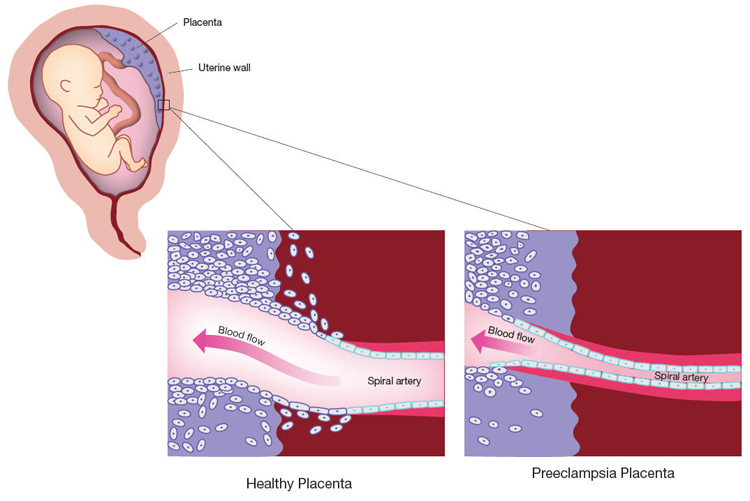
Widespread endothelial dysfunction explains many manifestations. Vasoconstriction increases systemic vascular resistance and blood pressure. Glomerular endothelial injury contributes to proteinuria and impaired renal function. Increased capillary permeability promotes oedema and can contribute to pulmonary oedema. Hepatic involvement can cause elevated liver enzymes and severe epigastric or right upper-quadrant pain. Cerebral vascular dysfunction may produce headache, visual disturbance, hyperreflexia and seizures. Abnormal placental circulation can result in fetal growth restriction, placental abruption and fetal compromise.
Risk Factors
- Previous pre-eclampsia or hypertensive pregnancy disorder.
- First pregnancy.
- Chronic hypertension or chronic kidney disease.
- Type 1 or type 2 diabetes mellitus.
- Autoimmune disease such as systemic lupus erythematosus or antiphospholipid syndrome.
- Multiple pregnancy.
- Family history of pre-eclampsia.
- Obesity, increased maternal age and a long interval between pregnancies.
Signs and Symptoms
Some patients remain asymptomatic and are identified through routine antenatal blood-pressure measurement and investigations. Symptoms that should increase concern include a persistent or severe headache, blurred vision or flashing lights, severe epigastric or right upper-quadrant pain, nausea or vomiting later in pregnancy, sudden swelling of the face or hands, reduced urine output, breathlessness and a general feeling of being very unwell.
Assessment and Diagnostic Evaluation
Maternal Assessment
Assessment includes an accurate history, gestational age, previous obstetric and medical history, current medication, symptoms of severe disease and a systematic examination. Blood pressure must be measured using an appropriate cuff and reliable technique. Nurses should observe trends rather than treating a single number in isolation, while recognising that confirmed severe hypertension requires urgent action.
Laboratory Investigations
| Investigation | Purpose |
|---|---|
| Urine protein assessment | Evaluates renal involvement and supports diagnosis where appropriate. |
| Full blood count and platelets | Identifies thrombocytopenia and helps assess HELLP syndrome. |
| Serum creatinine / renal profile | Assesses renal involvement and deterioration. |
| ALT/AST and liver profile | Detects hepatic involvement. |
| Haemolysis investigations when indicated | Support evaluation for HELLP syndrome. |
| Additional coagulation studies | May be required when bleeding, severe thrombocytopenia or DIC is suspected. |
Fetal Assessment
Because pre-eclampsia can impair uteroplacental blood flow, maternal assessment must be accompanied by fetal surveillance. Depending on severity and gestational age, this can include fetal heart assessment, cardiotocography, ultrasound assessment of fetal growth and amniotic-fluid volume, and umbilical-artery Doppler velocimetry.
Management of Pre-eclampsia
Management is individualised according to gestational age, severity of hypertension, maternal symptoms, laboratory abnormalities, fetal condition and the resources available. The goals are to prevent maternal stroke and seizures, detect worsening organ dysfunction, protect fetal wellbeing when continued pregnancy is safe, prepare for premature birth when necessary and determine the safest time for delivery.
1. Initial Assessment and Stabilisation
2. Control of Hypertension
Antihypertensive treatment reduces the danger associated with severe maternal hypertension. Common medicines used in pregnancy include labetalol, nifedipine and methyldopa; intravenous labetalol or hydralazine and oral nifedipine are among options used in acute severe hypertension depending on local protocol. Choice depends on urgency, contraindications, previous therapy and the maternity service's protocol.
| Medicine | Role | Important nursing observations |
|---|---|---|
| Labetalol | Frequently used for hypertension in pregnancy; oral and IV forms have different clinical roles. | Monitor BP and pulse, response to treatment and adverse effects. Check relevant contraindications. |
| Nifedipine | Oral calcium-channel blocker used for ongoing treatment and in some acute protocols. | Monitor BP and symptoms such as dizziness, flushing and headache; follow the prescribed formulation. |
| Methyldopa | Long-established medicine for ongoing BP control. | Observe BP and CNS effects; it is not normally chosen for rapid emergency BP reduction. |
| Hydralazine | IV option in some acute severe-hypertension protocols. | Close BP and maternal/fetal monitoring is needed during acute treatment. |
3. Prevention of Eclamptic Seizures
Magnesium sulphate is the preferred anticonvulsant for treatment of eclampsia and is used for seizure prophylaxis in severe pre-eclampsia when clinically indicated. It is important to distinguish its purpose from antihypertensive therapy: magnesium sulphate primarily prevents or treats seizures; it is not being given simply to lower the patient's blood pressure.
4. Fluid Management
Fluid administration requires care because endothelial dysfunction increases the risk of pulmonary oedema. Maintain accurate intake and output records in severe disease, assess urine output and respiratory status, and administer IV fluids according to the obstetric plan rather than giving unnecessary fluid boluses.
5. Fetal Surveillance and Timing of Birth
Delivery removes the placenta, which is the central driver of the disease, but the timing of birth depends on the balance between maternal risk and fetal maturity. Deteriorating maternal condition, inability to control severe hypertension, serious laboratory abnormalities, eclampsia, placental abruption or evidence of fetal compromise can make earlier delivery necessary. Pre-eclampsia alone does not automatically mean caesarean birth; the mode of birth is determined by obstetric circumstances.
Eclampsia
What Is Eclampsia?
Eclampsia is the occurrence of convulsions in association with pre-eclampsia when another neurological cause does not better explain the seizure. It is a life-threatening obstetric emergency and may occur before labour, during labour or postpartum. Eclampsia represents severe neurological involvement, but a patient does not always have a long period of obvious warning symptoms before a seizure.
Possible Warning Features
Severe persistent headache, visual disturbance, severe epigastric or right upper-quadrant pain, worsening hypertension, neurological irritability and deteriorating laboratory findings can precede eclampsia. Their absence does not guarantee that a seizure will not occur.
Emergency Management of Eclampsia
Nursing Management of Pre-eclampsia and Eclampsia
Nursing and midwifery care extends far beyond checking blood pressure. Continuous assessment allows the nurse to recognise deterioration early, administer high-alert treatment safely, prevent avoidable injury and coordinate maternal and fetal surveillance.
Nursing Assessment
- Monitor BP at the frequency required by severity and treatment response.
- Assess pulse, respiratory rate, oxygen saturation and temperature as clinically indicated.
- Assess consciousness, headache, visual symptoms, hyperreflexia or other neurological changes.
- Ask about epigastric/right upper-quadrant pain, nausea, vomiting and breathlessness.
- Observe for vaginal bleeding or abdominal pain suggesting placental abruption.
- Maintain accurate intake and output records where indicated and report oliguria.
- Review trends in platelets, creatinine and liver enzymes.
- Assess fetal movement and assist with prescribed CTG, ultrasound and Doppler surveillance.
Priority Nursing Diagnoses
Priority Nursing Interventions
- Provide the prescribed level of maternal observation and escalate deterioration immediately.
- Maintain seizure precautions in patients considered at significant risk.
- Administer prescribed antihypertensives and magnesium sulphate safely and evaluate response.
- Maintain careful fluid balance and observe for pulmonary oedema.
- Facilitate fetal surveillance and promptly report abnormal findings.
- Prepare the patient and equipment for urgent birth if maternal or fetal status deteriorates.
- Reduce unnecessary environmental stimulation in severe neurological disease while ensuring essential monitoring continues.
- Provide clear explanations and emotional support to the patient and family.
- Document symptoms, observations, medicines, fluid balance, fetal findings, escalation and responses accurately.
Nursing Care During an Eclamptic Seizure
- Call for immediate assistance and note the approximate onset and duration of seizure activity.
- Protect the patient from injury without forcibly restraining her.
- Do not insert anything into the mouth.
- After convulsive activity, support airway and breathing according to the emergency protocol and assess oxygenation and circulation.
- Prepare and administer prescribed magnesium sulphate and antihypertensive treatment.
- Continue frequent maternal observations and assess the fetus after maternal stabilisation.
- Document the seizure, assessment, medicines, response and subsequent plan of care.
HELLP Syndrome
HELLP stands for Haemolysis, ELevated Liver enzymes and Low Platelet count. It is a serious manifestation within the pre-eclampsia spectrum. Patients may experience malaise, nausea, vomiting and epigastric or right upper-quadrant pain. Hypertension or proteinuria may not always appear dramatic, so symptoms and laboratory abnormalities require urgent obstetric assessment.
Complications
| Maternal complications | Fetal / neonatal complications |
|---|---|
| Eclampsia, stroke, HELLP syndrome, acute kidney injury, pulmonary oedema, hepatic injury, placental abruption, coagulopathy/DIC and maternal death. | Fetal growth restriction, placental insufficiency, fetal compromise, preterm birth, complications of prematurity, placental abruption and stillbirth/perinatal death in severe disease. |
Postpartum Care
Delivery does not immediately remove the risk of maternal complications. Pre-eclampsia can persist after birth and eclampsia can occur postpartum. Continue blood-pressure and symptom surveillance, prescribed antihypertensive treatment and magnesium sulphate when indicated. Repeat laboratory investigations when clinically required, monitor fluid balance, and educate the patient about symptoms requiring urgent review. Follow-up is important because a history of pre-eclampsia is associated with increased future cardiovascular risk.
Prevention and Patient Education
Early and regular antenatal care supports timely recognition. Patients at increased risk may be prescribed low-dose aspirin according to their clinician and applicable guideline. WHO also recommends calcium supplementation in settings where dietary calcium intake is low. Nurses should teach patients to seek urgent assessment for severe headache, visual disturbance, severe upper abdominal pain, breathing difficulty or other concerning symptoms.
Quick Review for Nursing Examinations
- Pre-eclampsia is a multisystem pregnancy disorder, usually developing after 20 weeks.
- Proteinuria is important but is not mandatory when qualifying maternal organ or uteroplacental dysfunction establishes the diagnosis.
- Severe hypertension: ≥160 systolic and/or ≥110 diastolic.
- Eclampsia: convulsions associated with pre-eclampsia when another cause does not better explain them.
- Magnesium sulphate is the preferred anticonvulsant for eclampsia and is used for seizure prophylaxis when indicated.
- HELLP: haemolysis, elevated liver enzymes and low platelets.
- Important organs affected include the brain, kidneys, liver, lungs, blood/platelets and placenta.
- Birth removes the placental driver of the disease, but postpartum monitoring remains essential.
References and Clinical Guidance
Clinical content should be interpreted alongside current institutional obstetric protocols. Principal guidance used for this educational chapter: World Health Organization (WHO), Pre-eclampsia fact sheet, updated December 2025; NICE Guideline NG133, Hypertension in pregnancy: diagnosis and management; and contemporary nursing-management structure informed by standard nursing care-plan organisation.
Educational use: This material is intended for nursing and midwifery learning and does not replace patient-specific assessment, prescribing guidance or an obstetric emergency protocol.